Review of Exhibitions
Taiji Taomote at Gallery Onetwentyeight / New York
アート イン アメリカ 2007年4月号
「アメリカ・ニューヨーク市 128画廊 タイジ タオモテ 彫刻展」
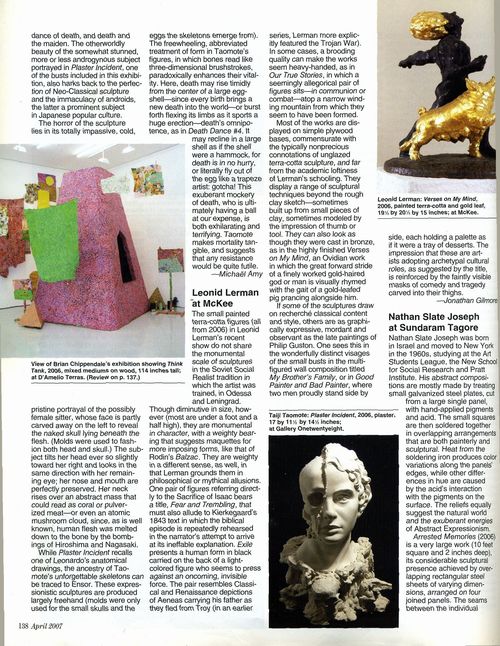
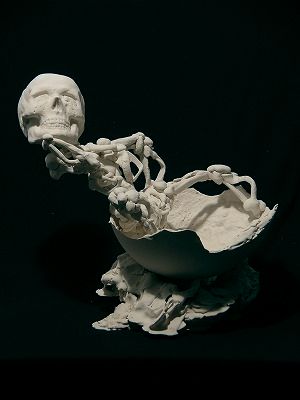
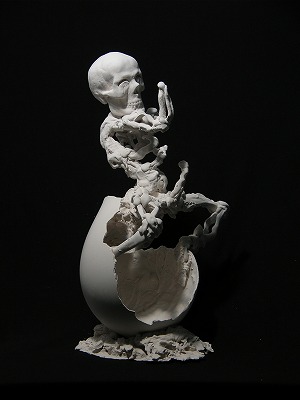
In his meticulously produced plaster sculptures (all 2006),
Taiji Taomote veers in the flick of a wrist from purity to decay
and corruption.
This Japanese artist has a fascination with death,
which he imagines lurking both within and outside us, and liable to strike at any moment.
彼の緻密な作りの石膏彫刻において、(すべて2006年制作)
タイジ・タオモテは、彼の手わざによって腐敗や崩壊から美を導き出す。
この日本人アーティストは、我々の外部と内部に潜む死・受けるべき滅びの時
のイメージに魅了されている。
In his respect, Taomote`s work is reminiscent of 20th-century Expresionism and 19th century Symbolism,
and of medieval themes like the dance of death, and death and the maiden.
タオモテの作品において注目すべき点は20世紀の表現主義と、19世紀の象徴
主義・中世における「死の舞踏」・死神・乙女などを想起させる点にある。
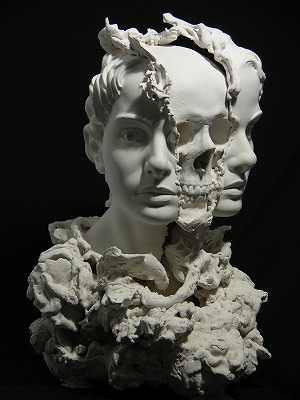
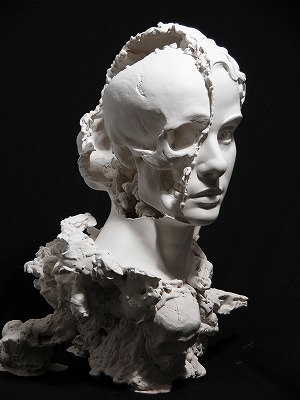
The otherworldlybeauty of the some what stunned, more or
less androgynous subject portrayed in "Plaster Incident",
one of the busts included in this exhibition, also harks back to the perfection
of Neo-Classical Sculpture and the immaculacy of androids,the latter a prominent subject in Japanese popular culture.
この展覧会の出品作の一つで、多少中性的な主題の「石膏事変」のあの世的
な美しさは少々恐ろしげではある。またこの作品は、日本の大衆文化における
究極の新古典主義彫刻か、純粋なアンドロイドとも言うべき、卓越した主題であると結論できる。
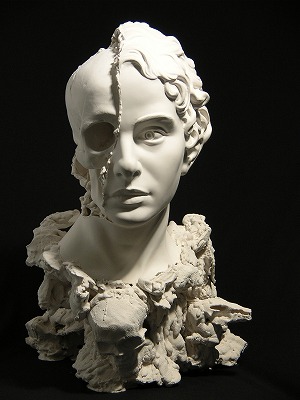
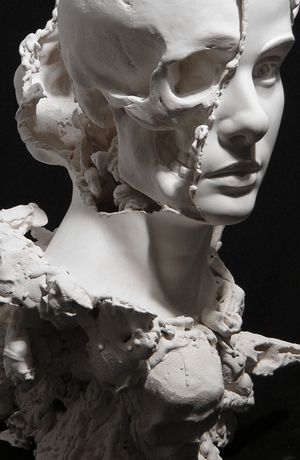
The horror of the sculpture lies in its totally impassive, cold,
pristine portrayal of the possibly female sitter, whose face is partly carved away on the left to reveal the naked skull lying beneath the flesh.
(Molds were used to fashion both head and skull.)
この恐ろしげな彫刻は、冷たく、全く平然とした状態にあり、顔の左の一部が引き裂かれ、
肉の下に潜む骨を暴かれている。
もしかすると、この像は女性の真実の描写かもしれない。
(頭部と骸骨の部分は共にシリコン型によって作られている)
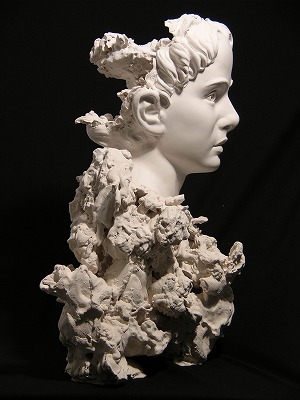
The subject tilts her head ever so slightly toward her right and looks
in the same direction with her remaining eye; her nose and
mouth are perfectly preserved. Her neck rises over an abstract mass
that could read as coral or pulverized meat-or even an atomic mushroom cloud,
since, as is well known, human flesh was melted-down to the bone by the bombings of Hiroshima and Nagasaki.
この作品は僅かに頭を右に傾け、残りの目は同方向を見ている。彼女の鼻と
口は完全に残っている。彼女の首は抽象的な量塊の上に立ち上がっている。
そのイメージは、珊瑚の骨格か、あるいは粉砕された肉。
あるいは広く知られた、人類の肉体が溶解し、骨に帰した、
広島と長崎への核攻撃における原子雲のように立ち上がる。
While "Plaster Incident" recalls one of Leonardo`s anatomical drawings,
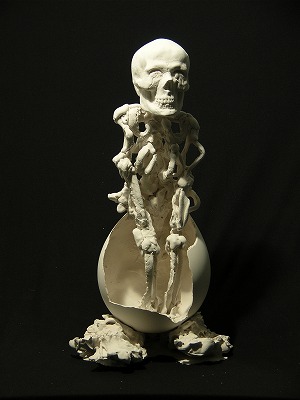
the ancestry of Taomote`s unforgettable skeletons can be traced to Ensor.
また、作品・「石膏事変」はレオナルド・ダビンチの解剖学的図版を想起させる。
一方、タオモテの忘れがたい骸骨の作品群は、アンソールの仕事の影響を見てとれる。
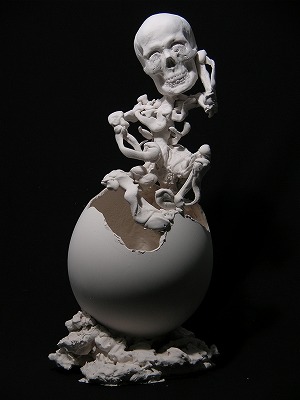
These expressionistic sculptures are produced largely free hand
(molds were only used for the small skulls and the eggs the skeletons emerge from).
The freewheeling, abbreviated treatment of form in Taomote`s figures, in which bones read like three dimensional brushstrokes,
paradoxically enhances their vitality.
これらの表現主義的彫刻群は、主にフリーハンドによって制作された。(頭骨と卵の
形はシリコン型から制作された。)
その自由奔放で抽象化されたタオモテの作品の形態は、骨を三次元において筆書
きして、それらの生命力を逆説的に強化しているようでもある。
Here, death may rise timidly from the center of a large egg-shell--
since every birth brings a new death into the world.
--or burst forth flexing its limbs as it sports a huge erection--
death`s omnipotence, as in "Death Dance #4". It may recline in a large shell as if the shell were a hammock,
「死」は大きな卵殻の中心からためらいがちに立ち上がる。
あらゆる「誕生」は世界に新たな「死」をもたらして来た。
前後屈曲し、はちきれんばかりの巨大な勃起をさらして、全能たる「死」・作品
「DEATH DANCE #4」は、大きなハンモックのような貝殻に寄りかかっている。
for death is in no hurry, or literally fly out of the egg like a trapeze artist : gotcha!
This exuberant mockery of death, who is ultimately having a ball at our expense, is both exhilarating and terrifying.
「死」は焦らずに、「どうだ!」と文字通り曲芸師のごとくひらりと舞う。
我々を嘲笑い、我々の魂の代価を奪い去る。
Taomote makes mortality tangible, and suggests that
any resistance would be quite futile.
我々の死すべき運命は明白であり、それらに抵抗するのは全く無駄であるとタオモテは暗示しているのだ。
© 2007 Michael Amy
訳:T・タオモテ